
Jason's Deli
Jason's DeliFood & Drink
4.81.14K Reviews
- Version
- 26.4.3
- Installs
- 500.00K
- Age Rating
- Everyone
Screenshots

Our Review of Jason's Deli
 Analysis by Appyee
I found Jason’s Deli most useful when I treated it as a practical shortcut rather than as a full restaurant-discovery tool. The app is built around a simple promise: choose food from Jason’s Deli, arrange delivery or take-out, and avoid waiting in the ordering line. After spending time with it, my view is that it does that job well, especially when I already know what I want and need a smoother way to place the order.
That focus is also its biggest strength. I do not open it expecting a broad marketplace, endless restaurant comparisons, or a social food experience. I open it because Jason’s Deli is the destination. The cleaner the decision is in my head, the more useful the app becomes. For a familiar lunch, a planned family meal, or a quick pick-up between errands, it removes several small annoyances from the usual process.
How the ordering experience feels in everyday use
The app belongs to the Food & Drink category and is developed by Jason's Deli. It is free to install, carries an Everyone content rating, and has reached over 500 thousand installs. Those details fit the product well: this is an accessible ordering utility aimed at ordinary customers, not a specialized service for experienced app users.
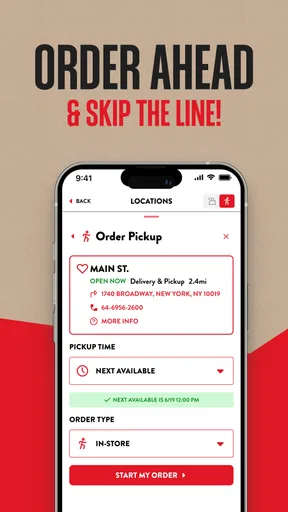
My preferred way to use it is before I leave home. I can think through the order without standing near a busy counter, check the choices at a calmer pace, and arrange take-out for the point in my schedule when I will actually arrive. That makes a noticeable difference on a workday. Instead of joining a line, explaining several items aloud, and trying to remember modifications while people wait behind me, I can prepare the order when I have a spare minute.
Delivery is useful in a different way. When I am working from home or feeding people who cannot easily leave, the app keeps the ordering process in one place. I still have to make the normal food decisions, of course, but the app makes the handoff between choosing the meal and requesting it feel more direct than calling a restaurant and repeating the order verbally.
The best part is the reduction of friction between “I need food” and “the order is being handled.” That sounds modest, but it matters in the situations where restaurant apps earn their place: short breaks, tired evenings, rushed departures, and meals where one person is coordinating for several others.
Why take-out is where it makes the strongest case
For me, take-out is the clearest reason to keep the app installed. A customer who already knows Jason’s Deli and has a regular order can move quickly, while someone unfamiliar with the menu may need more time to explore. The app is therefore more valuable as a repeat-ordering companion than as a first introduction to the restaurant.
A realistic example is a weekday lunch with two colleagues. I can decide on the order before the lunch break begins, enter the selections without trying to talk over a crowded room, and use the app to organize the pick-up plan. That does not make the food itself better, but it protects the limited time around the meal. The practical advantage is not excitement; it is predictability.
There is also a useful coordination benefit for households. If several people want different meals, building the order digitally gives me a chance to review the complete basket before committing. I can slow down for a moment and check whether I selected the right item for each person. That review step is especially helpful when an order includes different preferences or when I am placing it for someone who is not standing beside me.
One tip I would give a new user is to prepare the order earlier than the moment hunger becomes urgent. Restaurant ordering apps are most comfortable when I have enough time to read, compare, and check the details. If I wait until everyone is already impatient, the convenience advantage shrinks because I am still making decisions under pressure.
Delivery is convenient, but convenience has boundaries
Delivery makes the app relevant beyond the traditional restaurant visit, yet I would not assume it is automatically the best option for every meal. If I am nearby and already passing the restaurant, take-out is likely the simpler choice. If I am ordering during a particularly busy period, I would also allow extra time rather than planning around an overly tight schedule.
The app helps me submit the order, but it cannot remove the practical variables that come with delivery. Someone still has to receive the food, the location still needs to be clear, and the timing still matters. I find it most suitable when I can stay available and when the meal is important enough to justify having it brought to me.
This is one of the trade-offs compared with ordering directly at the counter. In-person ordering gives immediate human interaction and may feel easier for a very unusual request. The app is better when I value privacy, speed, and the ability to review my choices before sending them. Neither method wins in every circumstance.
Small workflow habits that improve the experience
My first useful habit is separating browsing from ordering. I look through the available choices when I am not rushed, then return when I am ready to place the meal. That makes the app feel less like a last-second emergency button and more like a planning tool. It is particularly helpful when I am ordering for more than one person.
The second is checking the order as a complete meal rather than judging each selection in isolation. A sandwich, side, drink, or dessert may look correct individually while the overall order still misses what someone expected. A final basket review catches those mistakes before they become a frustrating conversation at pick-up.
The third is choosing the fulfillment method based on the day, not habit. I use take-out when I am already moving through the area and delivery when leaving would disrupt work or home responsibilities. That simple distinction prevents me from using delivery when it offers little benefit or choosing take-out when I do not realistically have time to collect it.
These are not flashy features, but they are the kind of details that decide whether a restaurant app becomes part of my routine. The value comes from fitting the ordering process around the day rather than forcing the day to revolve around the restaurant.
Where the app is less convincing
The focused design can feel limited if I want more than a direct Jason’s Deli order. I cannot use this as a general-purpose comparison service for nearby restaurants, and I would not recommend installing it for someone who rarely chooses Jason’s Deli. A broad delivery platform may be more practical for users who want to compare menus, delivery options, or restaurants from one screen.
That limitation is not a flaw in the narrow sense; it is a consequence of the app’s purpose. Still, it affects the value calculation. A dedicated restaurant app needs to be meaningfully useful to me often enough to justify another icon, another ordering habit, and another place to manage meals. Regular Jason’s Deli customers are more likely to reach that point than occasional visitors.
I also think the experience depends heavily on how decisive the user is. When I already know the kind of meal I want, the direct route feels efficient. When I am undecided, browsing a restaurant-specific app may not solve the larger question of what to eat. It can present the available choices, but it does not replace personal judgment or the broader discovery offered by multi-restaurant services.
Another practical weakness is that digital convenience can encourage rushed confirmation. Because the process feels quick, I have to make a deliberate pause before submitting. That is particularly important for group orders. The app reduces verbal mistakes, but it does not automatically know whether I chose the right meal for the right person. The responsibility for reviewing the order remains with me.
Compared with calling the restaurant, the app is easier when I want a visual, self-paced process. A phone call may still be preferable for someone who dislikes typing, has difficulty navigating menus, or wants to ask a question before ordering. Compared with walking in, the app is more efficient for planned take-out but less satisfying for someone who enjoys deciding spontaneously at the counter.
Who should use it regularly?
I would recommend Jason’s Deli to people who order from the restaurant repeatedly and want a dependable digital route for delivery or take-out. It is especially well suited to office workers arranging lunch, households coordinating different meals, and customers who dislike waiting in line. The free price also makes trying it low-risk if the restaurant is already part of your routine.
It is a sensible choice for someone who prefers to order privately and carefully. I like having time to review what I am selecting rather than making every decision while a cashier or other customers are waiting. That extra control is small, but it makes the process calmer, particularly when I am ordering for several people.
I would be more hesitant to recommend it to someone who wants a single app for every restaurant. That person will probably get more value from a broader food-ordering service. I would also skip it if Jason’s Deli is only an occasional option in my area. A dedicated app makes the most sense when the restaurant’s menu and service are familiar enough to become part of my normal meal planning.
For accessibility and household use, the Everyone rating makes it broadly approachable. I still think the best audience is defined less by age and more by routine: people who want a straightforward way to arrange a Jason’s Deli meal without standing in line or making a phone call.
What the current release tells me
The app was released on April 30, 2017, and the current version is 26.4.3. It supports devices running Android 7.0 or later. In practical terms, that gives it a long-running presence rather than the feel of a brand-new experiment. I would still check device compatibility before installing on an older phone, especially if that device has been kept on an earlier Android release.
Its reception is strong, with an average rating of 4.8 from around 6.1 thousand ratings and about 1.1 thousand written reviews. I do not treat a store score as a substitute for personal experience, but the combination suggests that many customers find the basic ordering purpose worthwhile. My own judgment is similar, with an important qualification: the app earns that positive impression when I am already choosing Jason’s Deli, not when I am searching the whole food market.
The scale of adoption also makes the app feel like a practical part of the developer’s customer experience rather than an obscure side project. Jason's Deli has a clear reason to offer it, and users have a clear reason to open it. That alignment is more important to me than a long feature list.
My final recommendation
Jason’s Deli is a focused ordering app that succeeds by making a familiar restaurant easier to use. I value it for planned take-out, workday lunches, delivery at home, and group orders that benefit from a quiet review before submission. Its strongest quality is not novelty; it is the way it removes waiting and reduces the need to repeat an order aloud.
The trade-off is equally clear. This is not the right tool for restaurant discovery, broad price comparison, or people who seldom choose Jason’s Deli. A general delivery platform or direct in-person conversation may suit those situations better. Even regular users should pause to check the complete order and choose delivery or take-out according to the day’s real schedule.
For me, the app is worth recommending to a friend who already likes Jason’s Deli and wants a simpler routine around ordering. I would describe it as a useful, specialized companion: not a replacement for every way of getting food, but a good solution when the restaurant is already the decision and the main problem is getting the order handled smoothly.
Verdict
Strengths of Jason's Deli
- Easy online ordering for pickup or delivery
- Clear nutrition and allergen information on many menu items
- Catering options suit offices, parties, and group meals
- Rewards program can provide savings for frequent customers
- Menu includes vegetarian and lighter meal choices
Limitations of Jason's Deli
- Delivery availability and fees vary by location
- Some menu items may be unavailable during busy periods
- Prices can feel high compared with typical fast-food options
- App experience may differ depending on the selected restaurant
- Customization options are not equally available for every item
Similar Picks in This Category
View All
Rappi: Food Delivery, Grocery
Rappi, Inc - Delivery3.5

McDonald’s: Cupons e Delivery
Arcos Dorados4.3

Swiggy: Food Instamart Dineout
Swiggy4.7

Blinkit: Groceries & more
Blinkit4.8

foodpanda: food & groceries
Foodpanda GmbH a subsidiary of Delivery Hero SE4.0

Zomato: Food Delivery & Dining
Zomato4.7
Frequently Asked Questions
What is the Jason’s Deli app used for?
The Jason’s Deli app is designed to make ordering from participating Jason’s Deli restaurants more convenient. After installing it, you can browse the menu, customize sandwiches, salads, soups, desserts, and other items, place pickup or delivery orders where available, and review order details before checkout. Availability and features may vary depending on your location and the restaurant selected.
Can I order Jason’s Deli delivery and pickup through the app?
Yes, the app generally supports online ordering for pickup, and delivery may be available in selected areas. During testing, the available options depended on the chosen restaurant, opening hours, delivery coverage, and local service conditions. Before placing an order, check the estimated preparation or delivery time, applicable fees, minimum order requirements, and whether your address is within the supported delivery area.
Does the Jason’s Deli app offer coupons, rewards, or special deals?
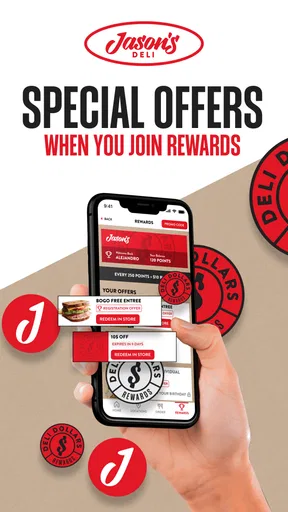
The app may provide access to Jason’s Deli promotions, digital offers, loyalty benefits, or account-based rewards when these programs are available in your region. Offers can change frequently and may include restrictions such as expiration dates, minimum purchase amounts, selected menu items, or participating locations. Always read the promotion details before relying on a discount at checkout.
Can I customize meals and view nutrition or allergen information?
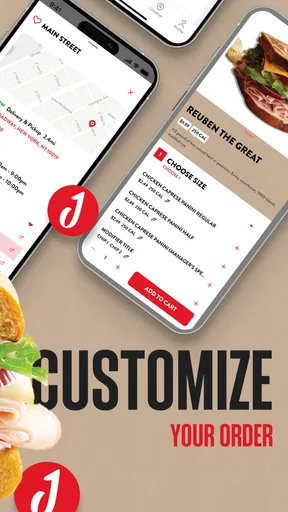
Jason’s Deli is known for offering customizable menu choices, and the app typically lets you modify ingredients or select options while building an order. Nutrition and allergen information may also be available for many menu items, but recipes, preparation practices, and ingredient availability can vary by location. Customers with serious allergies should contact the restaurant directly because shared kitchen equipment may create cross-contact risks.
Is the Jason’s Deli app free to download, and what should I know before using it?
The Jason’s Deli app is generally free to download, although the cost of food, delivery charges, service fees, taxes, and optional tips still applies when you place an order. An internet connection and accurate location or address information may be required. You should also check whether the app supports your device, review its permissions and privacy practices, and confirm that your preferred restaurant participates in mobile ordering.
